Smart Street Lamp Management System
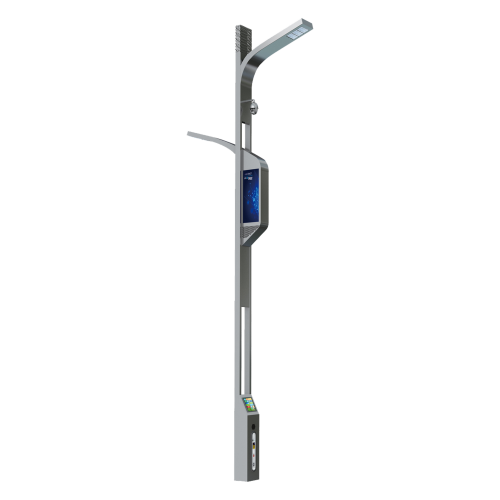
Our company has independently developed a smart lamp pole system control platform that integrates modern information technology and Internet of Things technology to create intelligent lamp poles. These are not merely traditional street lighting equipment; they also incorporate various intelligent functions such as smart screens, public broadcasting, environmental monitoring, data collection, and public services. It is regarded as an important component of the intelligentization of urban infrastructure. It helps in the construction of smart cities, enhances the efficiency of urban management and the quality of residents’ lives. It has significant practical significance and profound strategic value in improving urban operational efficiency and achieving sustainable development.
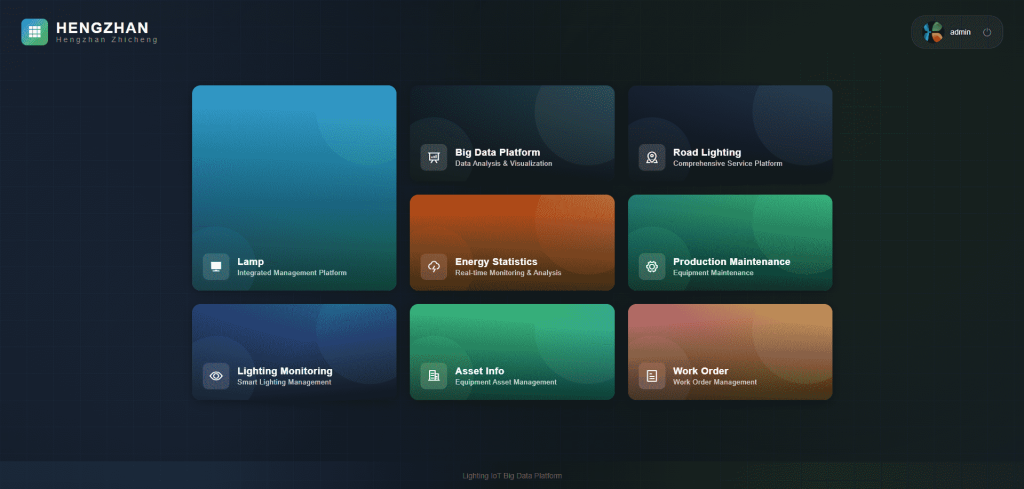
1. Technology Control and Innovation Capability
Independent research and development means that the company has complete control over the core technologies and is capable of conducting customized development based on specific needs. The Wenzhou R&D center, as the forefront of technological innovation, can continuously drive technological iteration and upgrading, ensuring that the smart lamp pole system remains at the leading edge of the industry.
2. Rapid Response and Upgrade Capabilities
The self-developed platform is capable of responding promptly and conducting functional upgrades or optimizations when facing market changes or adjustments in customer demands, thereby enhancing customer satisfaction. Due to our company’s possession of core technologies, during the maintenance process, we can directly identify the root cause of the problem and quickly resolve it, reducing system downtime and ensuring the stable operation of the project.
3. Cost Control and Maximization of Benefits
The self-developed platform helps to reduce long-term technical licensing fees and maintenance costs. Through continuous technical optimization, the cost-benefit can be maximized. Customized development based on project requirements is carried out to avoid unnecessary functional redundancy, thereby improving resource utilization efficiency and reducing cost expenditures.
4. Regional Support and Synergistic Effects
Our company’s research and development center is located in Longwan Zhejiang South Science and Technology City, which facilitates the establishment of close cooperative relationships with local governments, universities, and research institutions, enabling us to obtain policy support and intellectual resources. The industrial agglomeration effect within the science and technology city helps to form a virtuous cycle of technical exchanges and resource sharing, promoting technological innovation and industrial upgrading.
5. Sustainable Development and Long-Term Planning
The independently developed platform provides a solid foundation for the company’s long-term strategic planning, enabling it to make forward-looking arrangements based on the company’s vision and market trends. Through continuous research and development investment and technological accumulation, the company can build technological barriers, enhance market competitiveness, and provide strong support for future smart city construction.
6. Technical framework of big data visualization analysis
Data collection and transmission: Data is collected through sensors, cameras, IoT devices, etc. and transmitted to the cloud platform or data center via wireless or wired networks.
Data storage and processing: The collected massive data is usually stored in big data platforms such as Hadoop, Spark, etc. The data undergoes preprocessing operations such as cleaning, deduplication, and normalization.
Data analysis: Using techniques such as data mining, machine learning, and statistical analysis, valuable information is extracted and patterns and trends are identified and predicted.
Visualization display: Results of the analysis are presented graphically in forms such as charts, heat maps, trend graphs, and dashboards, making it easier for users to understand intuitively. Common visualization tools include Power BI, Tableau, D3.js, etc.
Decision support system: Based on the visualization results, real-time decision support is provided. For example, traffic signal control, lighting control, emergency response, etc.
7. Work Order Management Efficiency
The networking and data collection capabilities of smart street lamps enable urban managers to monitor the operation of urban infrastructure in real time, thereby enhancing management efficiency. For instance, the system can monitor the malfunction status of street lights and promptly report to the management center, reducing the workload of manual inspections. When a fault occurs, it can quickly locate the fault location and arrange for repairs, reducing repair time and costs.
8. Intelligent Monitoring and Security
The smart lamp pole system is usually equipped with high-definition surveillance cameras, which are used for real-time video monitoring of public areas in the city to enhance urban security. It can effectively assist urban managers or the police department in conducting public safety monitoring, preventing criminal activities and social instability factors. Combined with intelligent analysis technology, through the algorithm calculation of the back-end computer in the behavior recognition system, abnormal behaviors can be automatically identified and alarms can be triggered.
9. Data Collection and Analysis
The smart pole system collects and sends data through the smart gateway. This data is not only used for lighting but also integrates various sensors and devices (such as environmental monitoring, door magnets, inclination sensors, etc.) for data collection. These data can be used for urban big data analysis, helping managers make more scientific and reasonable decisions. For example, based on the data collected by the smart pole, urban traffic flow and the allocation of public service resources can be optimized.
10. Alarm Notification and Equipment Status
By analyzing historical data, the system can predict potential faults of the equipment, carry out maintenance and replacement in advance, and avoid sudden failures. The smart pole system platform can upgrade the software of the equipment, optimize functions, and enhance performance. In case of problems, remote control can be used for debugging and repair, as well as monitoring the working status, operation time of the equipment, and reducing the cost and time of on-site maintenance.